
Technical Analysis

Encyclopedia of Chart Patterns Review

Author

Thomas N. Bulkowski

Rating

4.5/5

"Do chart patterns actually work? Our review of 'Encyclopedia of Chart Patterns' explores the hard data behind price action and statistical win rates."

Book Overview

Stop guessing and start counting. Bulkowski provides the ultimate statistical "cheat sheet" for chart patterns, revealing exactly which ones work, how often they fail, and how far they move.

Key Takeaways

  • 1

    Patterns as Probabilities: Chart patterns are not guarantees; they are statistical tendencies that can be measured, ranked, and verified through historical data.

  • 2

    The Failure Rate Reality: Bulkowski reveals the "break-even failure rate" for every pattern, teaching traders to avoid setups that look perfect but statistically fail to reach their targets.

  • 3

    Performance Ranking: Not all patterns are equal; certain formations (like the "High and Tight Flag") consistently outperform others in terms of average gain and reliability.

  • 4

    The Measure Rule: Every pattern has a specific mathematical formula for calculating price targets based on the height of the formation.

  • 5

    Context Matters: The performance of a pattern changes significantly based on whether it appears in a bull or bear market and whether it is a reversal or continuation.

Who is this for?

The "Quant-Minded" trader who doesn't trust visual patterns alone and wants to see the historical win rates, average gains, and failure percentages before risking capital.

Who should avoid?

Casual traders looking for an easy read or those who dislike spreadsheets and dense statistical tables.

Comprehensive Review

The Scientist in the Trading Room

If John Murphy is the "Dean" of technical analysis, Thomas Bulkowski is its "Chief Scientist." Most books on charting tell you that a "Head and Shoulders" pattern is a reliable reversal signal because it "looks" like one. Bulkowski, however, isn't interested in how things look; he is interested in what the numbers say.

For our Advanced Trading Paths, this book is the bridge between visual intuition and quantitative reality. Bulkowski spent years manually identifying thousands of patterns across decades of market data to answer the one question every trader asks: "Does this actually work?".

The Anatomy of a Statistic

Every chapter in this massive 1,000-page encyclopedia follows a strict, scientific template for each pattern:

  • Failure Rates: The percentage of times a pattern breaks out but fails to move at least 5%.

  • Average Rise/Decline: The mean move following a valid breakout.

  • Throwback/Pullback Rates: How often the price returns to the breakout point before continuing its move.

  • Performance Rank: How this specific pattern compares to all others in the book.

This level of detail allows you to move beyond "hoping" a trade works and starts you thinking in terms of Expectancy, as discussed in our Risk Management section.

The "Holy Grail" Formations

Bulkowski’s research reveals that not all patterns are created equal. He highlights "High and Tight Flags" and "Inverted Head and Shoulders" as some of the most reliable and profitable formations in history.

Conversely, he exposes some popular patterns as having surprisingly high failure rates or low average gains. For a Forex trader, this data is invaluable. It helps you decide which setups deserve your full position size and which ones should be avoided altogether.

The Trap of the Pullback

One of the most profound insights in the book is the data on Throwbacks and Pullbacks. Bulkowski proves that when a price returns to the breakout point (a pullback), the eventual performance of the trade actually decreases.

While many "Learning Paths" teach you to wait for the retest, Bulkowski’s data suggests that the most explosive and profitable moves are the ones that never look back. This insight changes the way you manage your stops and profit targets in real-time trading.
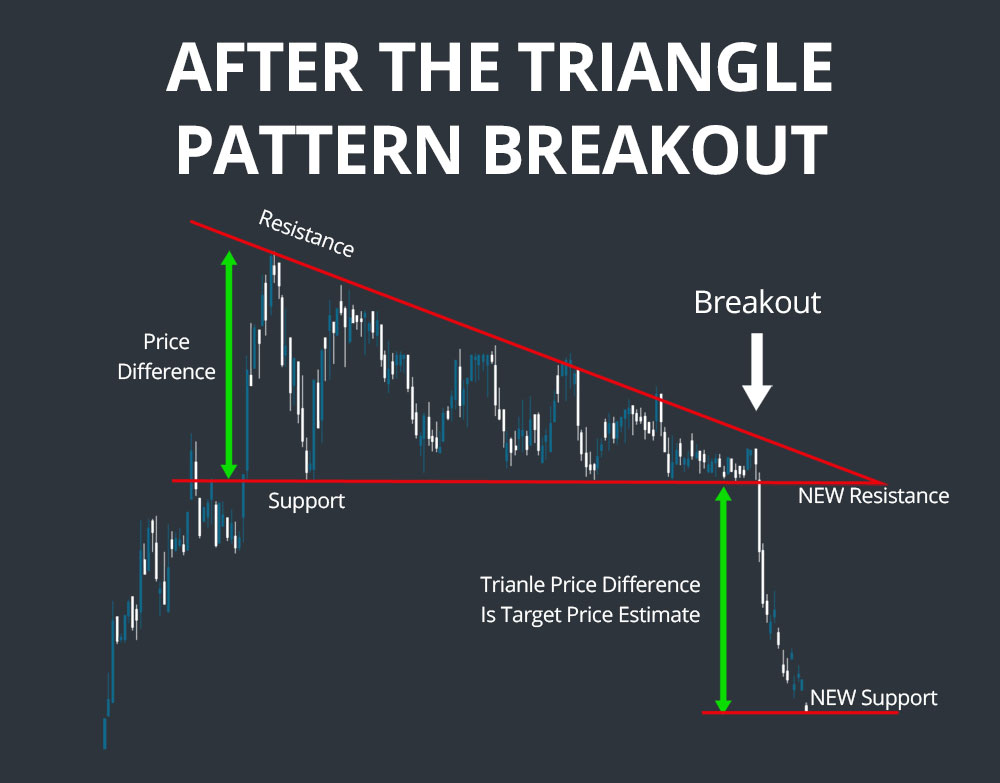
Bulkowski warns that a "breakout" is only valid if the price closes outside the pattern boundary. Many traders lose money by entering on "intra-day" moves that eventually fail and close back inside the pattern.

The Measure Rule: Calculating the Exit

Bulkowski provides a specific "Measure Rule" for every pattern. For example, in a Rectangle pattern, you take the height of the rectangle and add it to the breakout price to find your target.

But he goes a step further by providing the Success Rate for reaching that target. He might show that while a pattern has a 70% win rate for a 5% move, it only has a 40% win rate for reaching its full "Measure Rule" target. This allows you to set more realistic profit objectives based on historical probability rather than greed.

Article Image

Event Patterns: Beyond the Daily Chart

In the latest editions, Bulkowski expanded his research to include "Event Patterns"—reactions to earnings surprises, dead cat bounces, and stock upgrades/downgrades. For the Forex trader, this translates perfectly to High-Impact News Events. He categorizes how markets react to sudden shocks, providing a statistical framework for trading the chaos that follows major economic announcements.

Look for "Tall and Narrow" patterns. Bulkowski’s data shows that patterns that are tall and narrow tend to outperform those that are short and wide, as they represent a more intense burst of momentum.

Quotes from the Pattern Statistician

  • "The best way to find a successful pattern is to look for one that has already started to work."

  • "Performance improves when you trade in the direction of the prevailing trend."

  • "Numbers don't lie, but they can be misinterpreted. Always look at the sample size."

Final Verdict

Thomas Bulkowski’s Encyclopedia of Chart Patterns is the ultimate reality check for the technical analyst. It is not a book you read for inspiration; it is a book you use as a reference manual every time you see a new formation on your screen.

By integrating this data into your trading, you move away from the "gambler" mindset and toward the "casino owner" mindset—knowing exactly what your edge is and exactly how often it is expected to pay out. If you are serious about the Technical Analysis of the markets, this encyclopedia is your most powerful weapon.

Get This Book

Add this essential title to your trading library.

Buy on Amazon

Quick Facts

Difficulty
Professional
Category
Book Review
Type
Technical Analysis

Share Review

Share this content